Philip Marlowe—Eddie Mars
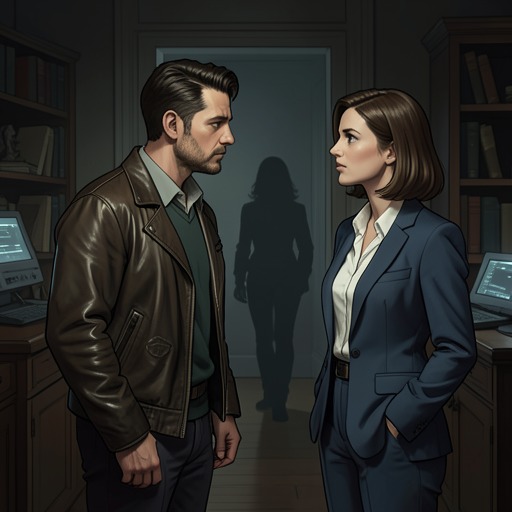
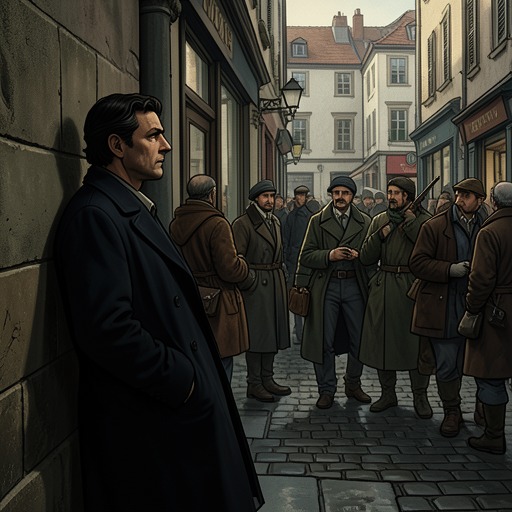
The Big SleepPhilip Marlowe—Eddie Mars is an adversarial relationship disguised, at moments, as a negotiation between acquaintances. Mars offers money, friendship, and possible future favors; Marlowe answers with professional boundaries and pointed questions. As the investigation develops, Marlowe links Mars to the hired violence surrounding Harry Jones, then declares his intention to deal with Mars himself. Their civility never resolves the conflict: it makes the contest over information and responsibility more visible.
A Meeting Framed as a Transaction
Mars approaches Marlowe with the language of payment and obligation. He says he appreciated how Marlowe handled a matter the previous day, admits that the handling had initially angered him, and says he later recognized Marlowe had been right. He asks what he owes. Marlowe asks what the payment would be for, refusing to accept a vague fee as though their dealings were simply a matter of settling an account.
Mars says he has a line into police headquarters and receives information as events happen, rather than as they appear in newspapers. The exchange establishes information as one of the currencies between them: Mars boasts of his access, while Marlowe makes clear that he is not there to be bought. When Mars says he felt obliged to pay for the good treatment and is accustomed to paying for it, Marlowe restates his rule: he is paid for his work, serves one customer at a time, and does not take an extra payment from Mars.
Regan and the Limits of Friendship
The conversation turns to Rusty Regan, whose disappearance remains central to Marlowe’s investigation. Marlowe asks Mars directly whether he killed Regan. Mars denies it and asks whether Marlowe thought he had. Marlowe replies that he would not put it past him. The question is not an accusation backed by proof in this exchange; it is a test of Mars’s response and a reminder that Marlowe does not grant him the trust implied by their polite conversation.
Mars calls Marlowe “soldier” and asks whether they are friends. Marlowe agrees to the handshake, but the gesture does not cancel the suspicion between them. Mars offers that he may be able to do Marlowe a real favor someday, then says that Marlowe got everything from Captain Gregory this time. Marlowe answers by asking whether Mars therefore owns a piece of Gregory too. Mars denies that their connection is so extensive and calls them merely friends. The exchange leaves Marlowe alert to the possibility that Mars’s influence reaches into official channels, without establishing exactly what that influence consists of.
At the door, Marlowe asks whether Mars has had him followed in a gray Plymouth sedan. Mars’s eyes widen; he appears jarred, denies it, and asks why he would do such a thing. Marlowe judges his surprise genuine enough to believe and thinks he may also look worried, but cannot identify a reason for that concern. The scene preserves uncertainty rather than converting suspicion into fact: Marlowe raises the possibility of surveillance, Mars denies it, and Marlowe leaves without resolving what has prompted Mars’s reaction.
The Accusation Behind the Politeness
Later, Marlowe confronts Mona Mars, whom he addresses as “Silver-Wig,” with what he has learned about Harry Jones. He says Jones had brought him information about Lash Canino and that Canino killed Jones. Marlowe then distinguishes between the man who carried out the killing and the man he holds responsible for arranging violence: Eddie Mars, he argues, does not kill people himself but hires others to do it. This is Marlowe’s accusation, delivered to Mona; the scene presents it as his conclusion, not as an independent confession from Mars.
Mona tells Marlowe to leave. Her response ends the exchange without a denial that changes his view of Mars. The accusation sharpens the relationship’s underlying conflict: Mars’s apparent respectability and personal courtesies stand against Marlowe’s account of power exercised through intermediaries. Harry Jones’s death makes that distinction consequential. Marlowe is no longer merely testing whether Mars might be connected to Regan’s disappearance; he is explicitly connecting Mars to a pattern of violence carried out by others.
A Direct Confrontation Ahead
Near the end of the supplied scenes, Vivian Regan asks Marlowe to get her out and ensure that she is watched. She begins to mention Mars, but Marlowe cuts the subject short: he will see Mars after he has rested and will handle him. Vivian warns that Mars will try to kill him. Marlowe answers that Mars’s best man could not do so and that he will take his chances with the others. His reply makes the danger of their conflict explicit while keeping its next outcome unresolved.
Across these encounters, Marlowe’s professional independence and Mars’s influence form the relationship’s central opposition. Mars tries to define their dealings through payment, privileged information, friendship, and prospective favors; Marlowe accepts none of those as grounds for trust. He keeps asking questions—about Regan, official connections, and surveillance—and, after Jones’s killing, names Mars as the organizer behind delegated violence. The final promise to confront him turns their guarded verbal contest into an impending personal one, without showing what happens when they meet.